
PROVIDING SUSTAINABLE SOLUTIONS FOR LOW ENERGY BUILDINGS AND INSTALLATIONS
SPRAY FOAM IS A UNIQUE INSULATION AND SEALING
Sealing a building's air leaks prevents drafts from windows, doors, attics and floor boardsSPRAY FOAM IS A UNIQUE INSULATION AND SEALING
PROVIDING SUSTAINABLE
SOLUTIONS FOR LOW ENERGY BUILDINGS AND INSTALLATIONS
Sealing a building's air leaks prevents drafts from windows, doors, attics and floor boards
providing better indoor temperature control.



About Spray Polyurethane Foam (SPF)
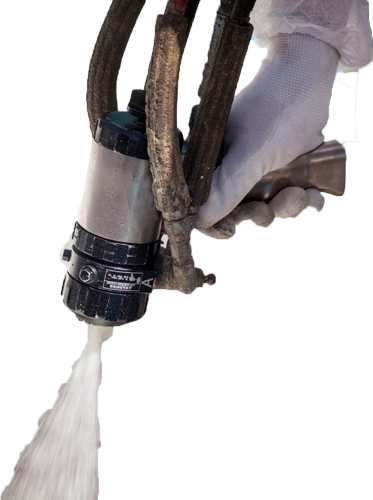
Spray Polyurethane Foam (SPF) is a unique insulation and sealing product which is applied on site...
Benefits of Spray Foam (SPF)
Insulation is one of the simplest and most cost-effective ways to improve the energy efficiency of buildings...
Spray Polyurethane Foam (SPF) in buildings
Spray Polyurethane Foam can form a continuous insulation system, create an effective air barrier...
For Professionals
Spray Polyurethane Foam insulation offers a wide range of benefits whether used as a retrofit...
// Who we are
The federation of
European Rigid Polyurethane Foam association
Known as PU Europe, it was founded in 1981 as BING to become the single European voice for the polyurethane (PUR/PIR) insulation industry. Today, PU Europe represents insulation producers, raw material suppliers and component manufacturers from eleven countries with activities covering the entire continent.
This website, dedicated specifically to Spray Polyurethane Foam (SPF), aims to promote the unique benefits of SPF application in the construction sector and has the ambition to become the reference in the EU SPF industry by providing guidance to ensure quality and safe SPF application throughout Europe.
To find out more about PU Europe, please visit the association website at www.pu-europe.eu

FAQ
What is Spray Polyurethane Foam (SPF)?
Polyurethane has many applications that we encounter in everyday life, such as shoe soles, mattresses, car dashboards and so on (find out more via https://www.polyurethanes.org/en/what-is-it/). SPF is a versatile insulation and air barrier material used all over the world. It helps keep buildings warm in winter and cool in summer. Thanks to its excellent insulation performance, the perfect adhesion of the product with its substrate and the fact that it can seal cracks and holes that other insulation products cannot, the material insulates and increases air tightness. Thanks also to its excellent adhesive properties, SPF does not move overtime and maintain its properties over the lifetime of the building. This makes insulating with SPF one of the most efficient and easiest ways to make a building have optimal conditioning, comfortable and climate-proof, both for renovation and new construction projects.
How is spray polyurethane foam (SPF) made?
SPF is produced on-site by mixing two liquid components, pMDI ( polymeric Methylene Diphenyl Diisocyanate) and a polyol blend, at high pressure using specialised equipment. The result is a polyurethane foam. The polyol blend is a mixture of polyols and other chemicals that play a specific role in the reaction process or impart important characteristics to the finished foam. These chemicals may include catalysts, surfactants, blowing agents, or flame retardants.
How is SPF applied?
The diisocyanate and polyol blend are mixed under defined temperature and pressure settings and sprayed onto a surface – wall, wall cavity, roof sheathing, etc. Once the reacting liquid hits a surface, it expands 30 to 120 times and solidifies into a polyurethane foam. It strongly binds to most surfaces via its adhesive properties during the foam reaction.
What is the difference between SPF that is applied on location by a professional company and SPF that is for sale in the do-it-yourself store?
SPF insulation cannot be done as a DIY project. It is important that it is carried out by a registered installer who has been approved and trained and is authorised by the manufacturer (system designer) of the product being installed. By contrast, the Polyurethane Foam that you can buy in a can from a hardware store is a one-component foam. The various components are already pre-mixed in the can in the correct ratio. The chemical reaction has already started in the can and the foaming and curing happen once extruded out of the can through contact with moisture from the air and substrate, and is relatively slow hardening compared to professionally sprayed two-component foam. It is typically used as a sealant to fill joints, holes and cracks like for example when installing a window frame. One-component foam is used by professionals and consumers also. SPF applied on-site by a professional company is a two-component foam. The two components are in separate drums or canisters and a pump/pressure is used in the drums. The equipment ensures an even stroke volume and proper mixing ratio. The components are conveyed through hoses or pipes to a spray gun where they are mixed. The mixture is applied on the substrate foams and then, shortly after, curing is completed.
How does SPF work versus traditional fibrous insulation products?
SPF creates a seamless air and thermal barrier, while fibrous insulation only creates a thermal barrier, making it an effective insulation product. The thermal resistance could be higher than fibrous insulation per thickness, reducing the need for larger cavities and structures. In addition, it will not degrade, settle or sag over the life of a building.
What is the difference between open-cell and closed-cell SPF?
There are two technical types of SPF: closed-cell and open-cell. To know more on the differences between open- and closed-cell SPF, please visit the Closed-cell & open-cell spray foam section under the About Spray Polyurethane Foam (SPF) chapter.
Is SPF PU Foam water resistant?
Polyurethane foam is a versatile material that can be used for a variety of applications. One of the most common questions about SPF PU foam is whether it is water resistant. The short answer is yes, all closed-cell SPF and some open-cell SPF are water resistant. Closed-cell SPF is often used in outdoor applications because of its water resistant (not waterproof) properties. However, there are some things to consider when using polyurethane foam in wet or humid environments. Not fully impermeable: one thing to consider is that polyurethane insulation foam is not completely impervious to water. This means that if the foam gets wet, it will eventually absorb some moisture. This can affect the performance of the foam.
Can SPF be painted?
Yes, polyurethane foam can be painted with most types of paint. It is recommended that an acrylic paint is used for best results. Be sure to apply a primer before painting the foam to get the best possible adhesion of the paint to the surface.
How long does SPF keep its insulating properties?
Its high insulating properties are maintained over several decades in line with the Construction Products Regulation and the PU specific harmonised technical specifications.
Is applying SPF safe?
Like with many products used in the construction industry, the use of SPF is safe when applied correctly and according to the applicable rules and guidelines (please visit the For Professionals section). Many independent studies prove this, such as the study of the Dutch Health Council, Spray polyurethane foam insulation and health.
In countries where possible, it is recommended to use a certified company for the application of the foam. SPF installers employed by certified companies have completed mandatory training requirements and inspectors supervise the correct application of the SPF.
Can a resident be present when SPF is being applied?
To ensure the health and safety of all occupants, no one should be present in the area during the application of SPF. Requirements may vary by country and region. Therefore, the most stringent applicable regulation – whether local, national, or industry-specific – should always be followed. Refer to relevant industry guidelines and the Safety, Health, and Environmental (SHE) matrix for comprehensive safety protocols.
Why is it better to have the work carried out by a certified company (not possible in all countries)?
Opting for a certified company will ensure that the works are performed following the applicable guidelines/regulations and, if required, is audited by a certifying body. This is a guarantee of good quality and safe execution. Please visit the For professionals section of this website to see the benefits.
Why is insulation important?
People spend up to 90 % of their lives indoors, making thermal comfort and air quality essential. High-performance polyurethane (PU) insulation helps maintain stable indoor temperatures and supports energy efficiency due to its low thermal conductivity. It also contributes to healthy air quality, as it meets strict low-emission standards. Durable and space-efficient, PU insulation provides long-term performance and sustainability by significantly reducing energy use and carbon emissions over its lifetime. Please visit the Sustainable Solutions with PU page on the Excellence in Insulation website.
What are the consequences of poor insulation?
When a home is poorly insulated and air sealed, the insulation layer has gaps and cracks that result in an uneven and discontinuous insulation layer that allows moisture and air to penetrate in both directions of the insulation throughout the building envelope. In addition to higher energy bills and discomfort, moisture within a poorly insulated home can lead to mould growth and an unhealthy indoor environment. Cold spots, air leaks and cracks in the building structure are often a food source for mould and mildew. In addition to the fact that mould and mildew can damage the building structure, they also pose a threat to the health of the occupants. So good insulation can pay big dividends and help to prevent problems.
Why is ventilation important, especially in a well-insulated home?
Good insulation goes hand in hand with good ventilation. A well-insulated home is an airtight home. With good airtightness, less uncontrolled air enters naturally through seams and cracks. SPF is an insulation material that really improves air tightness. However, it is still very important (especially in a well-insulated home) to ventilate all the time. Daily activities such as showering, cooking and even breathing can easily produce 10 to 15 litres of water in the form of moisture in a house per day.
What is the effect on the environment when insulating with SPF?
Insulating with SPF has a positive effect on the environment due to energy savings during the life of the building.
Can SPF be recycled?
Yes, it can. However, it does not happen very often yet because the technology to achieve this is not yet fully developed and more generally, the culture in the demolition/renovation sector is only now evolving towards more circular economy practices. Although the economics of recycling are not very good today, the industry is working hard to make recycling happen as soon as possible. Please visit the PU Europe website for more information. This is why the most common practice at present is to incinerate SPF waste with other debris to recover energy from it. Treated in this way, it has an energy value equal to the value of the original raw materials. However, it is essential to remember that the use of SPF throughout the life of the building has saved a lot of energy already.
What is the fire performance of SPF?
Both open-cell and closed-cell SPF are polyurethane foam plastics and have similar fire performance. Buildings insulated with SPF can exhibit excellent fire behaviour even though this is a combustible material. This is due to its so-called thermosetting character (the material stays rigid even when exposed to heat) and its high thermal stability. Furthermore, the fire safety of buildings and the fire behaviour of constructions are not determined by the materials used separately, but by the design of their construction elements. Please visit the MBA website to know more about the holistic and the Building, Installation and Organisational (B.I.O.) requirements framework (https://www.modernbuildingalliance.eu/b-i-o-framework).
Where can I find someone to apply SPF to my house?
Here.
Is there mandatory training to apply SPF?
According to the REACH restriction for diisocyanates, from 24 August 2023, any worker who comes into professional contact with diisocyanates must pass a training and examination. See https://www.safeusediisocyanates.eu. In addition, national certification bodies may impose other training requirements for workers working with SPF. Therefore, check the local legislation.

This website, dedicated specifically to Spray Polyurethane Foam (SPF), aims to promote the unique benefits of SPF application in the construction sector and has the ambition to become the reference in the EU SPF industry by providing guidance to ensure quality and safe SPF application throughout Europe.
Links
- On-line training platform owned and managed by ISOPA/ALIPA. Via this platform, any individual working with diisocyanates in one of the official EU languages can get trained and certified to their safe use (deadline for the implementation of REACH use restriction was 24th August 2023)
- Website of the Spray Foam Coalition (SFC) that was formed in December 2010 under the American Chemistry Council’s Centre for Polyurethanes Industry (CPI). The SFC promotes the use of spray polyurethane foam in U.S. building and construction applications
- Dutch knowledge platform for the sprayed PUR foam. This platform bundles all knowledge and expertise and promotes research, training and certification in the field of sprayed PUR foam
- European Polyurethane (PU) insulation website where you can find information about the benefits of insulation, and the role of PU (PUR/PIR) in achieving energy efficient buildings and a sustainable future
- Website about polyurethane and its wide variety of applications (in homes, offices, cars, etc.)
Copyright © Spray Foam all rights reserved - Privacy policy