Spray Polyurethane Foam (SPF) is a unique insulation and sealing product which is applied on site. This application process creates a tight building envelope, which improves energy efficiency and comfort. SPF is versatile and can seal roofs, ceilings, wall cavities, exterior and interior walls, crawl spaces, attics and floors (floor heating). It can limit air infiltration and air movement throughout the home, which helps reduce energy usage, limits intrusion of pollutants and allergens, and makes the home more comfortable.
SPF is a cost-effective way to insulate all kinds of areas, including awkward and hard to reach spaces. For example, it is often used to seal a roof space, providing insulation, air tightness, weather resistance and sometimes structural stability in one go. By creating a warm roof space, it also helps to prevent condensation. Because the product is sprayed on, it gives a seamless layer of insulating foam which bonds onto any type of surface. It can adapt to any shape or profile, so it is a very practical way of insulating all types of buildings (new construction and renovations).
Polyurethane insulation is created by the chemical reaction of two components, pMDI (polymeric Methylene Diphenyl Diisocyanate) and a polyol blend. Within minutes after these substances have been mixed, the end product (polyurethane foam) has finished expanding. With SPF it is possible to insulate rooms seamlessly. In addition, closed-cell SPF is extremely moisture resistant and therefore one of the most efficient and easiest materials for limiting heat loss through floors in homes and buildings and thereby making them more energy-efficient.
SPF should not be confused with OCF (One-Component Foam), which is a generic term for moisture-curing one-component foams dispensed from pressurised containers (“aerosol cans”), or factory-made rigid PUR/PIR insulation (http://www.excellence-in-insulation.eu).
Closed-cell & open-cell SPF
Closed-cell foams
Closed-cell foam contains tightly packed, closed cells that significantly reduce air movement through the material, creating an effective airtight barrier. While it also resists the passage of water vapor, some vapor can still permeate through the foam depending on its thickness and specific vapor permeability. This helps minimise the risk of moisture buildup when properly designed and installed. Compared to open-cell foam, closed-cell foam has a much higher density, offering a more solid, stable, and durable structure.
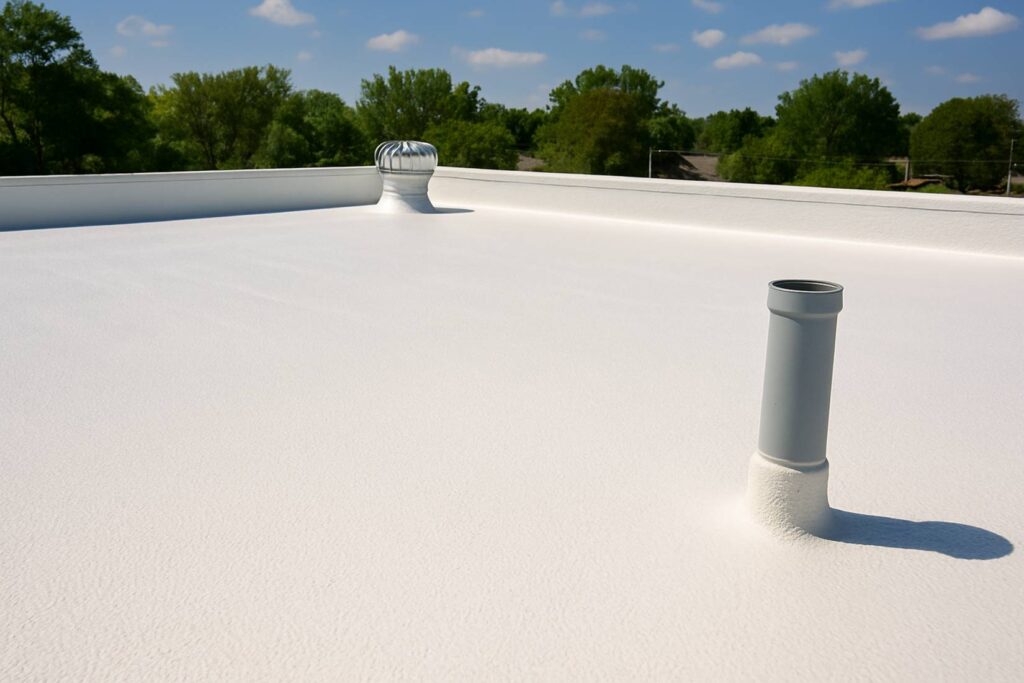
Flat roof sprayed with closed-cell before coating
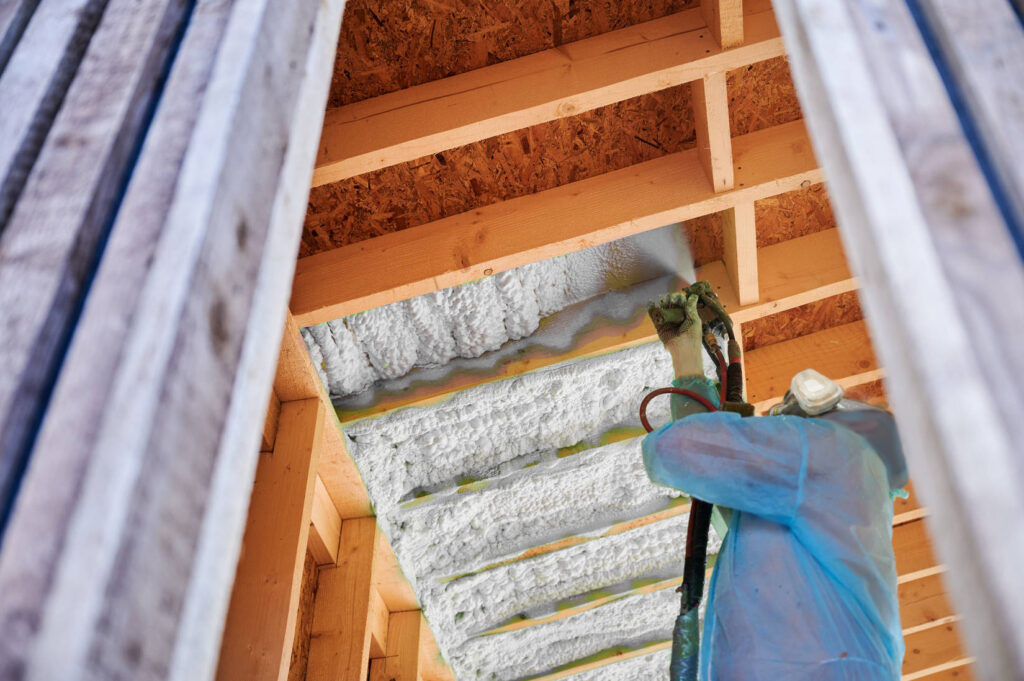
Attic insulated with open-cell foam between the rafters
Open-cell foams
These are foams where the cells aren’t completely encapsulated but still provide air tightness. The foam is a softer, more flexible material. Open-cell foam is breathable and eases vapour diffusion and bi-directional drying. It has a very low density, much lower than closed-cell SPF.