SPF contributes significantly to reducing the energy consumption of a building, thereby decreasing the demand from an energy system still largely based on fossil fuels.
Thermal insulation offers a durable solution. It will carry on being energy efficient over the life of the building without the need for any maintenance, ensuring lasting GHG and cost savings after the pay-back time is reached.
When taking a life cycle perspective at the building level, the amount of energy needed to produce and install SPF is usually offset within six months leading to net energy and GHG savings for most of the lifetime of the building.
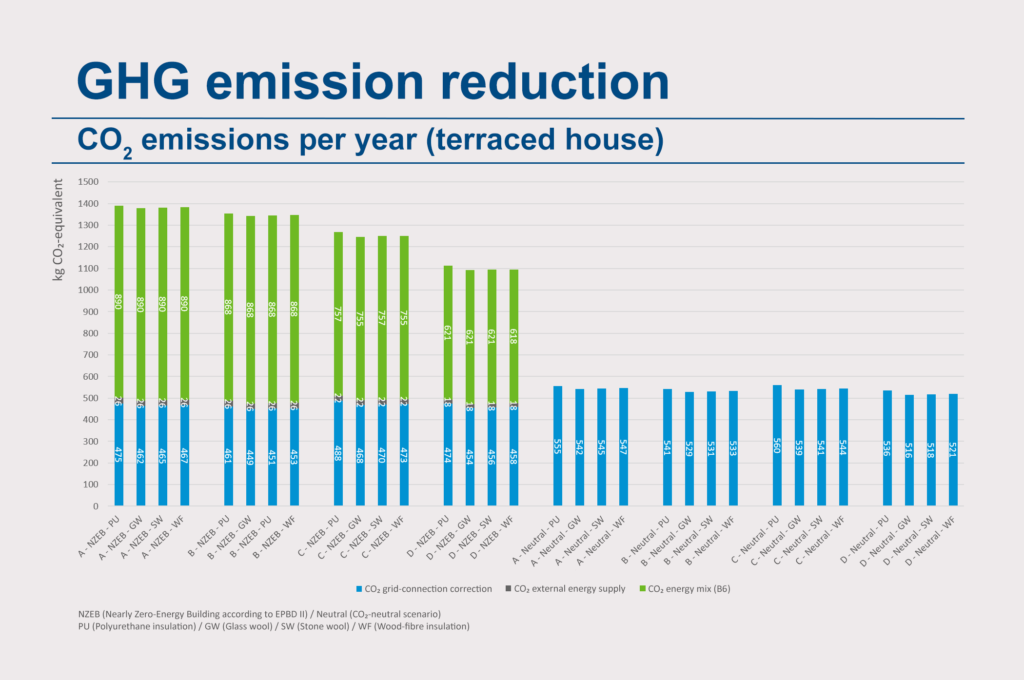
CO₂-neutral housing variants emit only the grid-connection related CO₂, while all NZEB variants have substantially higher total annual emissions due to operational energy use (Source, Develop Inc., Milieuprestatie energie- en materiaalgebruik – Onderzoeksopzet, belangrijkste resultaten en conclusies, 2022)
For the thermal performance of buildings, the so-called R value is the measurement of an insulation product’s ability to resist heat flow (thermal resistance in units of m²K/W).
The higher the number is, the more effective the insulation product is at increasing thermal efficiency and thereby insulating the building. The better performing insulation products like closed-cell SPF will have a high R value at a given thickness, so that you will need a lower thickness for the same R value compared with other insulating products.
At European Union level, the EPBD objectives cannot be met without the contribution of high-performing insulation technologies. Under the Directive, Member States must create strategies for a nearly-zero energy building stock by 2050. Without high-performing insulation and dealing with every part of the building (crawl space/attics) this is impossible, especially in regions with more extreme temperatures. It is important to remember that the energy intensity per square meter (m2) of the global buildings sector needs to improve on average by 30 % by 2030 (compared to 2015) to be on track to meet global climate ambitions in the Paris Agreement. (Source: Global Alliance for Buildings and Construction)
Up to 60 % of the energy used in buildings is for heating and cooling. Insulation is recognised as one of the simplest and most cost-effective ways to reduce the amount of energy needed to achieve this.
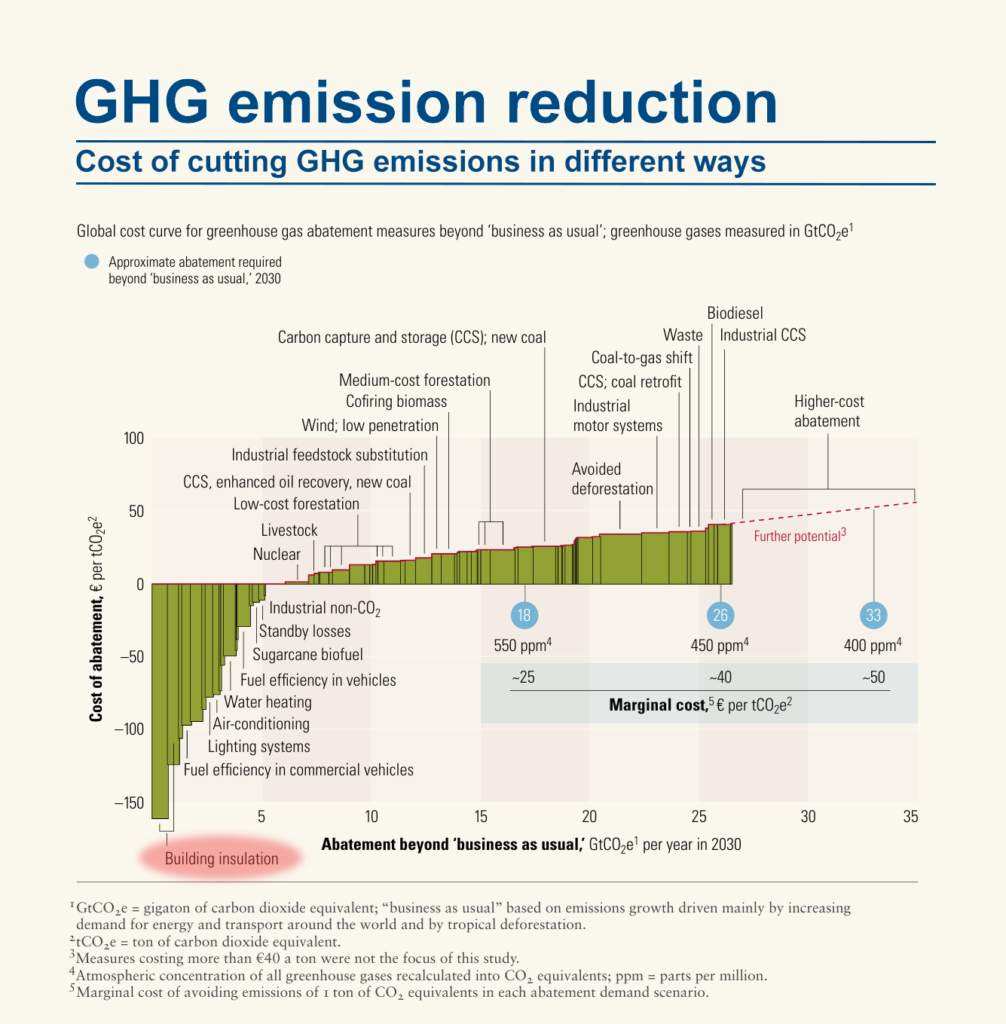
Almost a quarter of possible emission reductions would result from measures (such as better insulation in buildings) that carry no net life cycle cost (Source: A cost curve for greenhouse gas reduction, the McKinsey Quarterly, 2007)